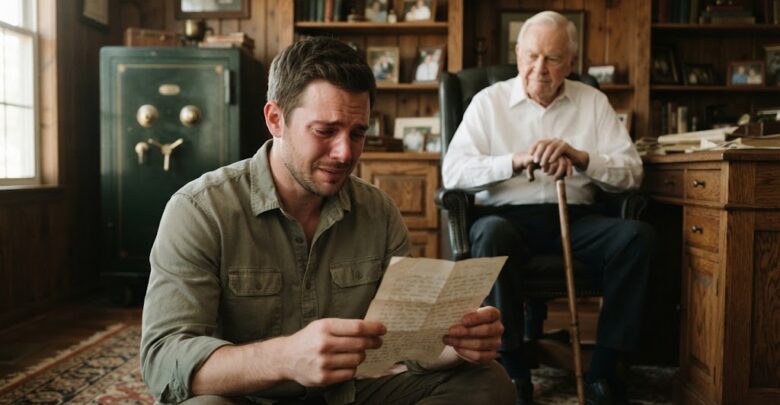
Some mistakes follow a person for years. This second chance story begins with a man who had already paid for one theft, then stood in front of an open safe and almost let history repeat itself.
Kevin was working as a live-in caregiver for an 85-year-old retired Marine whose eyesight had faded badly. What happened next turned into a second chance story about guilt, trust, and a mother who refused to give up on her son.
How a Second Chance Story Starts With a Mistake
Three years before he walked into that mansion, Kevin was working night shifts at a shipping warehouse. His mother had started cancer treatment, and insurance only covered part of it.
The bills kept coming after every appointment. He borrowed what he could, fell behind on rent twice, and finally took cash from a deposit bag at work, telling himself he would put it back.
He never got the chance. The company found the shortage, Kevin turned himself in, and he served 18 months in prison.
During her visits, his mother kept asking for one promise. She did not want him to throw away his own life trying to stretch hers.
Freedom did not bring much relief. Employers took one look at his background check and moved on. Any honest second chance story has a stretch like this, where nothing seems to change.
A Handwritten Ad and a Difficult Old Marine
Then Kevin spotted a handwritten sign taped inside a bus shelter. It offered $5,000 a month for a live-in caregiver.
The address led to a large house behind iron gates. Kevin showed up in a borrowed shirt with a curling collar and shoes worn down at the heels.
A gray-haired woman named Margaret answered the door. She warned him that Mr. Howard was a retired Marine with a famously sharp temper, and that four caregivers had already quit.
Kevin could have kept quiet. Instead, standing near the staircase, he told her he had been to prison for stealing, because he did not want the job built on a hidden truth.
Margaret took a long look at him. Then she said they had no use for another polished agency hire, and maybe he would outlast the others. That small opening was the first line of a second chance story Kevin never expected to get.
The first meeting with Mr. Howard went badly. The old man sat by a window with a cane across his knees and asked Kevin to make coffee. It was a rough start for any second chance story.
When Kevin set down the cup, Mr. Howard reached too early, knocked it over, and blamed Kevin for placing it so far away. Kevin nearly walked out.
Then he noticed the old man’s hand tightening on the armrest. Behind all the gruffness was embarrassment, and that was enough to make Kevin stay.
Small Kindnesses in a Big, Quiet House
Over the following months, Kevin learned Mr. Howard’s habits. He liked his toast nearly burnt, hated being hauled out of chairs, and wanted a warning before anyone entered a room or moved his things.
Every Tuesday, Kevin took him to eye treatments. Mr. Howard called them expensive disappointments, yet he never skipped a single one.
His late wife Eleanor’s pale-blue slippers sat beside his bed. When Kevin moved them to clean, Mr. Howard heard it and asked him to put them back, then nudged one so it sat crooked, the way Eleanor always left them.
One evening, Kevin found a second plate set at the dinner table. Mr. Howard insisted Margaret had done it, and Margaret denied it on her way past with the laundry.
Kevin sat down before the plate could disappear. Mr. Howard complained about the potatoes, then quietly slid the bigger piece of chicken across to him.
More gestures followed. A travel mug appeared by the door on early hospital mornings, and when Mr. Howard learned about Kevin’s worn shoes, he added a footwear allowance to his pay and called it noise control, not charity.
In return, Kevin read the sports page aloud every morning. Mr. Howard argued with nearly every paragraph, and those breakfasts became the calmest part of Kevin’s week. This is the quiet middle of a second chance story, where trust grows in ordinary moments.
At that table, Kevin was not a former inmate. He was just Kevin, the man who supposedly made terrible coffee for someone who always finished the cup.
The Hospital Bill That Changed Everything
Kevin’s mother laughed when he described his new boss. She guessed Mr. Howard was lonely, and pointed out that Margaret was paid to argue with him, which was not the same as company.
One afternoon, her doctor called to say she needed another round of treatment. Kevin made it to the hallway before he broke down.
A hand landed on his shoulder. Mr. Howard told him to go see his mother and called him son, something no one had done in years.
When Kevin shared this, his mother grew quiet. She asked for Mr. Howard’s full name and asked Kevin to bring her an envelope next time, but he forgot.
A week later, Margaret offered to pick up a sweater Kevin had left at the hospital. He joked that his mother might send a thank-you note back with her, then thought nothing of it.
Two days after that, the hospital’s estimate arrived. After expected insurance, their share of the new treatment could reach $10,000, with no promise of a cure.
A financial counselor wanted to talk about assistance, but Kevin could only see the total. He spent three nights scribbling numbers, and his savings came nowhere close.
When a Second Chance Story Nearly Falls Apart
Then came the afternoon Margaret left the safe open while she answered the kitchen phone. Mr. Howard sat a few feet away, his face turned toward the window light.
Kevin told himself the old man could not see. He set down the towels he was carrying and took two bundles of cash, $8,000 in under a minute.
That night, the money lay on his bed. He expected relief, but all he could think about was the second plate, the arm on the stairs, and Eleanor’s crooked slippers.
He had earned a place in Mr. Howard’s most vulnerable moments, and he had used one of them against him. Before sunrise, while Margaret checked a grocery delivery, Kevin put every bill back. A second chance story can turn on a choice made in the dark like this.
The Confession in Mr. Howard’s Study
At breakfast, Mr. Howard pushed away his toast as too soft. Then he tapped his cane and told Kevin to come upstairs.
In the study, he asked whether Kevin had anything to tell him. Kevin looked at the now-closed safe and confessed everything, including that he had returned the full $8,000 that morning.
Mr. Howard asked whether returning it erased the theft. Kevin said no, explained it was for his mother’s treatment, and admitted he had thought the same way the first time.
Kevin offered to pack his bags. He assumed this second chance story was over, but Mr. Howard told him to look at him.
The treatments were working, he explained. He still could not read, but he could make out familiar shapes against the light, and he had seen Kevin cross the hall to the safe and later go back.
He warned Kevin never to mistake poor eyesight for stupidity. Then he said that was not why he had called him in, and slid a thick envelope across the desk.
A Mother’s Letter at the Heart of This Second Chance Story
Kevin expected dismissal papers. Instead, he recognized his mother’s handwriting at once, down to the crooked K she always pressed too hard to write.
In the letter, Evelyn asked Mr. Howard not to let her son believe he was only the worst thing he had ever done. She wrote that Kevin had always believed he had to save her.
She recalled him bringing her a broken toy truck and, another time, a bird found under their porch. She fixed the truck but could not save the bird, and Kevin cried, convinced he had not tried hard enough.
Kevin remembered wrapping that bird in a dish towel and watching his mother bury it under the lilac bush. He had stood beside her holding a yellow plastic shovel.
Evelyn asked Mr. Howard not to shield Kevin from the consequences of his mistakes. But if he still saw good in her son, she asked him to keep reminding Kevin it was there.
She thanked him for calling Kevin son and for giving him work without shame. She wanted Kevin to know she had loved him long before any paycheck, and would still love him on the day he could not save her.
When Kevin asked how the letter got there, Mr. Howard answered with one name: Margaret. The envelope, the sweater, and the joke about a thank-you note all fell into place.
Kevin’s legs gave way, and he sat on the rug crying harder than he had in the prison visiting room. Mr. Howard dropped a handkerchief beside him and grumbled about tears on Eleanor’s rug. This was the moment the second chance story stopped being about money.
Second Chance Story Lessons on Accountability
Mr. Howard did not pretend nothing had happened. He told Kevin plainly that he had stolen and that giving it back did not erase it, but the return still meant something.
Kevin could stay under strict rules. Only Margaret would handle the safe, every household expense had to be written down, and a single lie would end his job.
Before Kevin left the study, Mr. Howard made him refold the letter along its original creases. He told Kevin to treat his mother’s trust better than he had treated the safe.
When Kevin asked why he had not called the police, Mr. Howard said he had watched a thief come back before anyone caught him. That did not settle the debt, he said, but it mattered.
He also required Kevin to attend weekly counseling through a reentry program Margaret found. Kevin resisted until Mr. Howard reminded him that stubbornness was not a treatment plan. The real strength of this second chance story is that forgiveness came with structure, not a free pass.
Counseling helped Kevin separate caring for his mother from trying to control every outcome. He kept showing up, because this part of his second chance story depended on him alone.
That same afternoon, he told his mother everything. She cried first, then pointed the hospital menu at him and told him to stop deciding for both of them, because she needed a son, not a thief pretending to be her rescuer.
What Happened After the Truth Came Out
The next morning, Kevin and his mother met with the financial counselor. They applied for assistance, set up payments, and talked honestly about what treatment could realistically offer.
Nothing was magically fixed. His mother was still sick, and Kevin still had to rebuild Mr. Howard’s trust one ordinary day at a time. That slow, unglamorous work is what makes this second chance story feel true.
Families facing similar bills do not have to face them alone. The American Cancer Society shares guidance on treatment costs and support, and hospital financial counselors can often point patients toward assistance programs.
Months later, Margaret retired after training a new aide. On her last morning, Mr. Howard grumbled that his toast was burnt, and she told him to make it himself.
He thanked her. She smiled and said it had only taken him 23 years.
After she left, Mr. Howard stood at the counter squinting at the toaster’s tiny markings. His sight had improved, but not that much.
Kevin stepped beside him and asked if he needed help. With his hand hovering over the dial, Mr. Howard said yes, and called him son. It was a quiet, fitting close to a second chance story that began with stolen money.
Why This Second Chance Story Stays With Readers
Kevin’s journey is not about a perfect man earning a reward. It is about someone who fell twice, chose to make it right before he was caught, and was met with honesty instead of easy forgiveness.
It also shows how a mother’s love can reach past hospital walls, and how a grumpy old Marine can quietly become family. Every second chance story like this reminds us that people are more than their worst moments.
If you enjoy real-life stories about family, trust, and starting over, you can find more at Divorce Matters Today.
In the end, a second chance story is rarely about one big rescue. It is about small, steady choices, and Kevin, Mr. Howard, and Evelyn show how much those choices can heal.