I was wiping down the counter and thinking about the lock on the front door when the phone rang. It was late enough that a call usually meant a last-minute order from someone just getting off work, or a college student who had lost track of time. I almost let it go to the answering machine. Then I picked it up, the way I always did, because a small shop does not get to be choosy about the final order of the night.
“Sir, I know six dollars isn’t enough for a pizza, but is there anything you can do?”
The woman’s voice trembled over the phone. I still hear it that way, years later, not loud and not dramatic, just worn thin, as if she had practiced the sentence and still hated having to say it. I looked at the clock.
I looked at the kitchen, where the last pizzas of the night were already waiting in their boxes. I asked the only question that made sense in that moment.
This is a fictionalized story written for entertainment, inspired by a widely shared anecdote about a pizza shop, a late-night phone call, and what followed.

I owned a small pizza shop that specialized in late-night deliveries. Most nights were predictable. Hungry college students. People finishing late shifts. Families ordering dinner after long days. The work had a rhythm I had grown used to: the first rush just after people got home, a quieter stretch in the middle of the evening, then a second wave from those who ate later than the rest of the neighborhood.
I knew which regulars wanted extra sauce and which ones always forgot a drink and called back five minutes later. I knew how the front windows looked after dark, with the oven glow still warm behind the counter and the street outside already thinning out.

Closing was my favorite part of the shift, if I am honest. The tickets were done. The radio was lower. I could hear the building settle. I would cover the sauce, wipe the prep table, and stack the leftover boxes for the morning. I had a habit of checking the phone one last time, as if a late call might still come in, and then I would tell myself that tomorrow would be soon enough. That night, tomorrow was not the point.
Someone was already on the line, and she was asking for help in the most careful way she could.
I have been in food long enough to know the difference between a joke and a person who is trying to keep their dignity. She did not sound as if she were shopping for a bargain. She sounded as if she had counted her money twice and still come up short, and as if calling a stranger was the option she had left. I pressed the receiver a little closer and tried to keep my own voice easy, the way you do when you do not want someone to feel like a problem.

“Where do you need the delivery?” I asked.
She hesitated. The pause was long enough that I thought the call had dropped. Then she told me.
“The women’s shelter. I’m staying here with my three children.”
For a moment, I didn’t know what to say. I had delivered to apartment buildings and dorms and offices after hours. I had delivered to a motel on the edge of town and to a nurse who met me at a side door. I had never been asked to bring dinner to a shelter, and I felt, immediately, the smallness of my usual questions about toppings and extra cheese. She had not called to discuss a menu. She had called because she had six dollars and three children, and she was hoping I would not hang up.
Then she whispered, “They haven’t had a proper dinner tonight. I just want to get them something warm.”
I looked at the clock again, though I already knew the time.
I looked at the pizzas waiting in our kitchen, the ones that would otherwise go into the back or be eaten standing up by whoever was still on the clock. I thought about how little it would cost me to be generous, and how much it might cost her to have asked.
“How many children did you say?”
“Three.”
I smiled, even though she could not see it. I wanted the next sentence to sound like a policy, not a favor, because I had already decided I was not going to send her a half-portion and a lecture about prices.
“Well, you’re in luck. Tonight we have a special family meal.”
She sounded surprised. “What kind of special?”
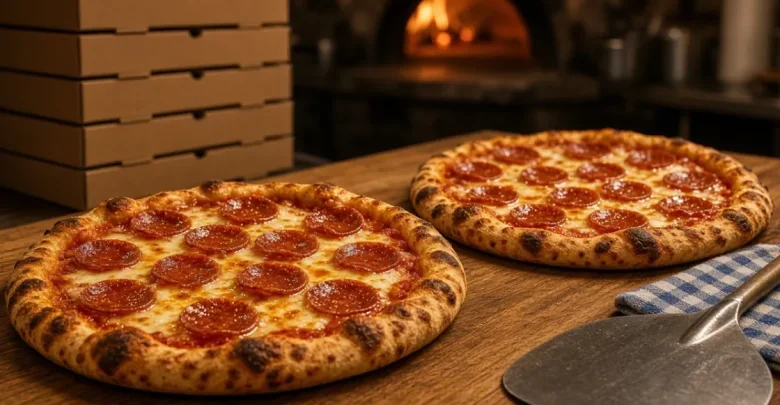
“Four pizzas, breadsticks, and drinks. Exactly six dollars.”
She went silent. I could hear something in the background, a muted hallway sound, maybe a child, maybe a television on low.
I waited.
“Really?”
“Really. And I think we can include something sweet for the kids.”
I heard her begin to cry. It was not loud. It was the kind of crying a person tries to swallow because they are still on the phone with someone they do not know.
“Thank you. You have no idea what this means.”
I didn’t tell her the truth. There was no six-dollar family special. I had just made it up. I could have said I would send the food for free, and a part of me wanted to, but I had already heard the care in her first sentence, that need to pay something, to not arrive at the door as a person receiving charity she had not asked to be called.
If she was going to feed her children that night, I wanted her to feel as if she had bought them dinner.

I told her I would have the order ready, took the name she was willing to give, and repeated the address back so she would not have to say it twice. After we hung up I stood for a second with my hand on the receiver, then I turned toward the ovens and got to work. I prepared four pizzas, added breadsticks and drinks, then packed cookies and juice boxes for the children. I was not trying to build a feast for show.
I was trying to make sure three kids and their mother would not have to divide one small pizza into careful slices and still go to bed a little hungry.

The shop was nearly empty by then. I told the last person on with me that I would take this one myself. I did not make a speech about it. I just did not want a driver to arrive at a shelter with an invented special and a handful of questions I had not prepared them to answer. I also, if I am telling the truth, wanted to see the order through to the door. It is easy to be kind at a distance.
It is a little different when you have to carry the boxes up the walk and place them in someone’s hands.
The night outside was cold enough that the heat from the pizza boxes felt like a small, useful thing. I drove with the windows up and the radio off. I thought about my own table at home, which would have food on it later whether I was there or not, and I thought about how a person can be doing their best and still come up six dollars short of a full dinner. I was not trying to turn the drive into a lesson. I was only trying not to arrive in a hurry, as if this were any other drop-off I wanted to finish so I could close the register.

When I arrived at the shelter, the mother was waiting. She looked exhausted in the specific way people look when they have been keeping other people calm all day.
Three children stood behind her, peeking around her legs, not quite hiding and not quite stepping forward. I set the boxes down a little so they could see there were several of them, not one lonely square of cardboard.
The youngest stared at the pizza boxes.
“All that is for us?”
I knelt and smiled. “Every bit.”
I can still see the way the oldest glanced at their mother, as if asking permission to believe it. She nodded, and some of the tightness left her shoulders. I did not ask how long they had been staying there. I did not ask what had happened. Those were not questions a pizza driver gets to treat as his business, even when he is also the owner, even when he has spent the last half hour thinking about this family as if he already knew them.
The mother handed me six crumpled dollar bills.
They were warm from her hand and folded in the careful way of money that has been counted more than once. I accepted them. Not because I needed the money. But because I wanted her to feel she’d bought her children dinner, not begged for it. I slipped the bills into my pocket without counting them in front of her. We both knew what they added up to. Counting would have made a ceremony out of something I wanted to keep simple.

Before I left, she quietly said, “I promise I’ll pay you back someday.”
I shook my head. “You already paid. Six dollars, remember?”
She laughed through her tears, a short laugh that seemed to surprise her.
One of the children asked if they could open a box before they even got inside, and she said they could wait two more minutes, which is the kind of ordinary parenting that continues even on the hardest nights. I wished them a good dinner, told them the breadsticks were still warm, and walked back to the car with an empty carrying rack and a pocket full of ones.
If I close my eyes, I can still hear the ovens ticking after that first delivery, and I can still see the six bills in my pocket, as if they were a receipt for a decision I was glad I had made.
I drove back to the shop thinking about those three children sitting down to a warm meal. I thought about the cookies, and I hoped I had packed enough.
I thought about the way the youngest had looked at the boxes, as if a pile of pizza were a kind of magic trick. I finished the closing checklist more slowly than usual. The night had not become something I wanted to announce. It had become something I wanted to keep, quietly, where I could still feel it the next time a shift ran long and I started to think that late-night work was only late-night work.
The following week, she called again. I recognized her voice before she finished the first sentence, and I felt a small, unexpected relief, as if I had been waiting without admitting I was waiting.
“Is that family special still available?”
I smiled. “For you? Absolutely.”
And so it continued. Every week, we delivered one of our little family specials to the shelter. Sometimes I added cookies. Sometimes extra drinks.
I never made a big announcement about it. We simply kept feeding a family that needed a little help. A couple of people who worked with me figured it out, of course. You cannot hide four extra pizzas every week in a shop that size. They started leaving a few cookies on the tray without asking, or writing the ticket in a way that did not make a fuss. I was grateful for that kind of quiet cooperation. Not every kindness needs a staff meeting.
On those evenings I sometimes took the delivery myself, and sometimes I sent someone I trusted, with instructions to be on time and to be ordinary about it. Ordinary mattered. I did not want the children to feel as if dinner were a performance.
I wanted the boxes to arrive the way dinner arrives when a parent has ordered it: expected, paid for, and theirs.
There were weeks when the shop was busy and I wondered, very briefly, whether I was being impractical. Then I would think about the first phone call, and the question answered itself. Four pizzas is not a small cost in a business with thin margins, but it is also not a mystery. We already cooked food for a living. The only new part was deciding that this family would not be the place I started saying no.
I learned a few things in that stretch of weeks, none of them complicated. I learned that a standing order can become a kind of promise, even if you never use that word. I learned that children will remember who showed up with dinner more clearly than they will remember a stranger’s name.
I learned that I did not need to know the family’s whole story in order to keep showing up on the same night with the same warm boxes. Curiosity is not the same thing as care. Care, in this case, looked like punctuality, enough food, and the same invented special every time, at the same invented price.
I remember one of those weekly deliveries in particular, not because anything unusual happened, but because nothing did. The boxes were ready on time. The breadsticks were still warm. A child opened the door with the look of someone who had been listening for footsteps. The mother thanked me, paid the six dollars, and told the kids to wash their hands. I said I would see them the next week, and I did. It is easy, later, to tell only the first night and the afternoon she came back with money.
The middle stretch mattered too. That was the stretch where dinner became reliable, and reliability, I have come to believe, is one of the kindest things you can offer a family that has already had too many surprises.
On the drive back from those ordinary deliveries I would sometimes think about my own first apartment, and about the nights when the grocery money had to be stretched, though my tight months were never the same as hers and I will not pretend they were. I had a shop. I had a key to a kitchen that still had food in it after closing. That difference is not a reason to congratulate myself. It is a reason to be useful when the phone rings. I have no patience for the idea that a person has to explain their whole life before they deserve a warm meal. She had already explained enough.
She had three children, six dollars, and the courage to ask.
Three months later, the calls stopped. The first missed week I told myself she had been delayed, or the shelter had a scheduling change, or a phone had been borrowed and returned. The second week I felt a tightness I did not enjoy. I wondered whether they were all right. I did not want to show up unannounced, as if I had a right to check on people who had never invited me into their private life. I also did not want to do nothing. I asked one careful question of a staff member at the front when I dropped off a regular order nearby, and I learned only that the family was no longer staying there. No emergency, as far as anyone would say. Just gone.
That should have been good news, and in a way it was, and still I missed the sound of her voice on the phone asking whether the special was available.
Running a shop teaches you a lot about hunger that has nothing to do with drama. People order late because they worked late. They order because they do not want to cook. They order because a box of pizza is a celebration, or a comfort, or the easiest way to feed a table without thinking too hard. And sometimes, on a night you did not expect, they order because they have come to the end of their options and a warm meal is the only next step they can still take. I try to treat all of those reasons with the same respect. The register does not need to know a customer’s whole history.
The pizza just needs to arrive hot, complete, and without a speech attached to it.
I will also say this, because it would be dishonest not to: there were evenings, early on, when I wondered whether I could keep the weekly special going if the rest of the business had a slow month. A shop is a shop, and rent does not care about a story. I looked at the numbers. I cut a little waste in other places. I kept the special. Later, when customers started adding money of their own, that worry eased, but I do not want to pretend the choice was always weightless. It was a choice I was able to make, and then a choice other people helped me keep making. That is the honest version, and I like it better than a version in which generosity never had to be budgeted.
In the end the shop stayed open, the specials kept going out, and I was glad I had not used a slow week as an excuse to stop.
The shop went back to its ordinary late nights. Students. Late shifts. Families who could pay the listed price without having to ask if there was anything I could do. I kept cooking. I kept closing the same way. Sometimes, when the phone rang just before lockup, I still had a half-second of hope that it would be her, and then I would take a regular order and tell myself that was a fine thing too.
Then one afternoon, the mother walked into my shop. Daylight changed her. She was smiling, and the exhaustion I remembered from the doorway was still there in some quieter form, but it was no longer the only thing on her face.
For a moment I just stared, because the last version of this story I had been telling myself had no ending, only a silence.
“I found a job,” she announced. “And we finally have our own apartment.”
I was thrilled. I came around the counter like a person who has been holding good news for someone else without knowing if it would arrive. She told me, in the short, proud sentences of a person who has been working very hard, that the children were settling in, that there was a kitchen, that she could cook again. I told her I was glad. I meant it more than the words could carry.
Then she reached into her bag and placed $200 on the counter. The bills made a small, neat stack, much neater than the six ones I could still picture from the first night. I tried to refuse.
“You don’t owe me anything.”
She shook her head. “I know. This isn’t for you. I want you to use it to help another family the way you helped mine.”

I looked at the money. Then at her. I thought about the six crumpled bills, and about all the weeks of so-called specials, and about the way she had insisted, even at the beginning, on paying something. This was the same instinct, pointed in a new direction. She did not want to close a tab. She wanted the help to keep moving.
An idea began forming, not all at once, but quickly enough that I could feel it take shape while she was still standing there. What if we could make this a regular part of the business?
What if customers who could afford a little extra helped provide meals for those who couldn’t? I told her I would do exactly what she asked. I told her the money would not go into my pocket. She nodded, as if that were the only acceptable answer, and then she bought a pizza at the regular price, which made me laugh, and she laughed too, and for a few minutes we were simply two people in a pizza shop in the middle of an ordinary afternoon.
That afternoon, our Pizza Forward program was born. The name was simple, maybe too simple, but I wanted something I could write on a note by the register without a long explanation. We began setting aside donated funds to prepare meals for struggling families.
I put a small jar on the counter, and then a line on the ticket so a customer could add a little if they wanted, and I told the staff the only rule that mattered: the food should go out with the same care as any paid order, and no one receiving it should be made to feel like a story we were telling about ourselves.

One pizza became another. One family became ten. Then dozens. The $200 did not last forever, and it did not have to. Customers began contributing, some of them a dollar, some of them enough to cover a whole meal, some of them with a comment that they had been on the other side of a hard week once and had not forgotten.
Our employees volunteered to help, staying a few minutes later to box an extra order or offering to drop one off on the way home. Slowly, something wonderful happened, and it happened without a banner or a camera. The shop kept being a shop. The program kept being a way to send dinner out the door.
There were practical problems, because there always are. We had to decide how to hear about families who needed a meal without turning the counter into a place where people had to explain themselves. We worked with a couple of local contacts who already knew who was in a tight month, and we kept a short, private list, and we did not post anyone’s name. We had nights when the donated funds were thin and nights when they were ahead. I learned to say thank you without making a donor feel like a hero and without making a recipient feel like a case.
It was not perfect. It was possible, which was the part I had not let myself imagine on the first night, when I was only trying to fill four boxes and get them still warm to a doorway.
Sometimes people asked me why I had started it, and I would tell a short version: a mother called, she had six dollars, we made a special, she came back later and told me to help the next family. I left out a lot, because a good story can become a thing you perform, and I did not want this one to belong to my performance. It belonged, if it belonged to anyone, to her first trembling sentence, and to the children who had peeked around her legs, and to the $200 she set down as if she were passing along a tool she had finished using.
Five years passed, the way time passes in a shop you show up to almost every day.
The mixer still hummed in the morning. The same crack appeared in the tile by the walk-in and then seemed to stop, as if it had decided not to grow. High-school kids I remembered as late-night customers came in as adults and ordered the same toppings. I got older in the ordinary ways. Pizza Forward kept going, sometimes busier, sometimes quieter, always there in the background of the register.
By then, Pizza Forward had delivered 830 meals to families who needed them. I know that number because we kept a simple count, not for a press release, but because I wanted to be able to tell the truth if someone asked whether the jar and the extra tickets were really doing anything. Eight hundred and thirty meals is a lot of dough and a lot of boxes.
It is also, if you think about it in the other direction, 830 times someone did not have to go to bed without a proper dinner.
And the mother who’d once called with six dollars? She’d become a social worker. I learned that in pieces, the way you learn good news from a person who drops in when she can. Her children were growing up, doing well, and volunteering at our pizza shop. The first time I saw one of them folding a box in the back, I had to check my memory against the present, because the last time I had really looked at that child, the child had been peeking around a pair of tired legs in a doorway. Time is a thief, and sometimes it is a generous one.
Recently, her daughter helped us prepare a meal for another struggling family.
She moved through the packing with a seriousness I recognized, the seriousness of a person who understands that dinner can be more than dinner. She carefully closed a pizza box, placed it beside the drinks, and looked up at me. Then she said something I’ll never forget.
“My mom says you saved us with pizza. Now I get to save someone too.”

I had to turn away for a moment. Because suddenly I remembered that first night: the trembling voice on the phone, the six crumpled dollar bills, the three hungry children peeking out from behind their mother. I did not feel like a person who had saved anyone.
I felt like a person who had happened to be holding a phone when a hard question arrived, and who had been in a position to answer it with food. That is a lucky place to be. It is also a responsibility, once you have seen how little it can take to change the temperature of a night.
Back then, I’d thought I was simply helping one family get through a difficult evening. I had no idea that a few pizzas would eventually inspire hundreds of meals. Or that one of those children would grow up wanting to give someone else the same kindness she’d received. People talk about paying it forward as if it were a slogan. Standing there, I saw it as something much plainer. A child had been fed. The child had grown up. The child had come back to feed someone else.
The path was straight, even if the years between the two ends of it had been long.
I smiled at the girl. “Ready to deliver this one?”
She nodded excitedly. “Ready!”

As I watched her carry the box toward the door, I finally understood something I had only felt in pieces before. Kindness doesn’t always end with the person who receives it. Sometimes it becomes something they carry forward, quietly, until they have a chance to set it down in front of somebody else. I had not invented that idea. She had said it to me in one clean sentence, and I had needed a moment to catch up.
Five years ago, a mother called my shop with only six dollars and asked for enough food to feed her children.
I gave her four pizzas. She came back with $200. And together, those small acts helped create 830 meals for other families. I thought I was selling a six-dollar dinner that night. I didn’t realize I was helping start something that would feed people for years to come.
I still close the shop the way I always have. I still wipe the counter and check the lock and glance at the phone, even now, as if a late call might be an ordinary extra order, or another person counting what they have and hoping it will be enough. Most nights, it is only the usual work, and I am glad for the usual work. Then there are nights when an extra box goes out under the name we gave the program, and I think of a woman who asked, very carefully, if there was anything I could do. There was.
There still is. It started with a special that did not exist, and it continues every time someone decides that a warm meal is a thing you can pass along.
If there is a lesson I trust, it is a small one. You do not have to know how a story will end in order to answer a trembling voice with more kindness than the ledger requires. You do not have to advertise it. You do have to leave the other person their dignity, which is why I took the six dollars, and why I took the $200 only when she told me it was not for me.
The rest took care of itself, or rather, a lot of people took care of it, one pizza at a time, until a girl who had once asked whether all those boxes were really for her could stand in my shop and say she was ready to deliver one to somebody else.
I locked the door after she left that evening and stood for a minute in the quiet. The ovens ticked as they cooled. The air still smelled like bread and tomato and the end of a good day’s work. I thought about the first special, and the weekly ones after it, and the jar on the counter, and the 830 meals, and I felt something I can only call gratitude, not for being the hero of anything, but for having been in the room when a small, decent choice was still available.
Then I turned off the lights, the way I always do, and went home with the kind of tiredness that feels earned.
Thank you for reading this one all the way through. It is a fictionalized story shared for entertainment, inspired by a widely circulated pizza-shop anecdote, and it is not a report about a particular real shop, a real shelter, or a real family.