Uncategorized
ENTITLED PASSENGER DEMANDED MY GRANDMA WITH PARKINSONS BE MOVED FROM BUSINESS CLASS BUT THE FLIGHT ATTENDANT GAVE HER A LESSON SHE WILL NEVER FORGET

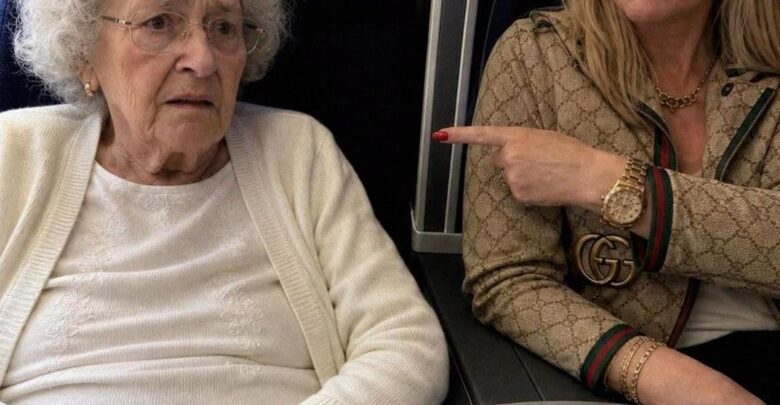
My grandmother Eleanor raised four children on her own, and my childhood memories are anchored in her kitchen, where she would set out apple slices on a saucer and let me listen to the radio while she cooked. I spent hours watching her hands—hands that had kneaded bread every Sunday for sixty years and written countless birthday cards in beautiful, elegant cursive. I once believed there was nothing those hands couldn’t do. That is why watching Parkinson’s disease slowly strip away her independence felt like such a personal, cruel theft. When Grandma turned eighty-five this March, she had one simple wish: to meet my cousin’s baby, Noah, who had been born in California back in January. My mother and I scraped together our savings to upgrade her to business class for the long flight, hoping to give her a little extra comfort and dignity. She had never flown anything but economy, and the excitement she felt was palpable; she was already dressed in her finest lavender sweater and pearl earrings hours before we even needed to leave for the airport, terrified of being rushed.
Everything was going perfectly until we boarded. I settled Grandma into seat 2C, where she marveled at the real silverware and the silk-like blanket. Before returning to my seat in economy, I made sure to pull a flight attendant aside. I spoke quietly, explaining that my grandmother had Parkinson’s and might struggle with holding drinks or opening packages, and I just wanted to make sure she wouldn’t be made to feel like a burden. The attendant was incredibly kind, assuring me she would keep a close eye on her. I walked back to my seat feeling relieved, unaware that a storm was brewing just rows ahead.
Twenty minutes into the flight, the relative peace of the cabin was shattered by a shrill, entitled voice. I heard a woman in seat 2A—a passenger draped in a designer Gucci coat—demanding that my grandmother be moved. She pointed a manicured finger at Eleanor and announced to the entire business class cabin that the fact that her hands were shaking was deeply unsettling and ruined her peaceful experience. She demanded that the staff either move my grandmother or upgrade her to a different seat away from the sight of her trembling. My grandmother, ever the person who had spent her entire life putting others before herself, immediately froze. Her face drained of color as she tucked her hands under the blanket, attempting to hide the very thing she couldn’t control. In a voice so small it broke my heart, she offered to move if she was bothering people.
I was already halfway out of my seat, surging with a protective rage, but the flight attendant reached the row first. She set down the tray she was carrying, her professional smile replaced by a look of steely resolve. When the woman in the Gucci coat escalated her demands, the attendant didn’t blink. She informed the passenger that she would not be moving a traveler based on a medical condition that made someone else uncomfortable. The woman scoffed, doubling down on her entitlement, but the attendant cut her off with perfect clarity: she would, however, move a passenger whose behavior was harassing others. The woman was stunned, protesting that she was being punished for expecting a high standard of service. The attendant simply pressed the call button, summoned the senior purser, and laid out the facts. Discriminatory harassment was a violation of airline policy, and the consequence was immediate: the woman was being reseated in economy.
The woman’s face turned a bruised shade of purple as she gathered her designer bag, looking around the cabin for an ally she would not find. As she was escorted away, she was met with cold glares from every passenger in the row. The final blow came from a young boy a few rows back, whose voice carried through the quiet cabin like a bell: Mommy, is that lady a villain? At least five people answered with a resounding yes. It was a moment of collective justice that left the woman thoroughly humiliated.
I rushed to my grandmother’s side, crouching by her seat to comfort her. She looked at me with such shame, whispering that she hated when people stared. She spoke of how she used to pipe icing onto cakes like flowers and crochet beautiful lace, lamenting how she had lost the ability to do those things without spilling a drop. It was a heartbreaking glimpse into the grief she carried, but as I held her trembling hands, the atmosphere of the cabin shifted. It was no longer a place of cold, business-class isolation. It was as if every person on that plane had quietly decided that Eleanor belonged to all of us.
For the rest of the flight, the cabin was transformed. A man across the aisle offered her his extra dessert, the mother with the teenage son shared words of empathy about her own father’s struggle with Parkinson’s, and the flight attendant continued to check on her with genuine grace, opening her tea and whispering that she had everything under control. When we finally landed in California, no one in business class rushed to stand up. They waited, allowing my grandmother to exit first, treating her with the deference she had always deserved but had been denied by that one cruel stranger. As we left the plane, a teenage boy leaned over and told her she had beautiful hands—a simple, profound act of kindness that left her weeping with gratitude.
By the time we walked through the terminal, Eleanor was a different person. She had been reminded that while one stranger might see a burden, the rest of the world saw a life well-lived. That afternoon, in a home in California, those shaking hands finally held her first great-grandbaby. Watching her touch Noah’s face, I realized that her dignity had never been tied to her physical steadiness. It was etched into the work she had done and the love she had given, and no amount of cruel behavior from a stranger could ever take that away. My grandmother Eleanor finally had the trip she deserved, not because the flight was perfect, but because she saw that there were more kind people in the world than there were villains.