Uncategorized
I THOUGHT MY DAUGHTER WAS ASHAMED OF MY POVERTY BUT THE SECRET SHE HID IN HER MANSION SHATTERED MY WORLD

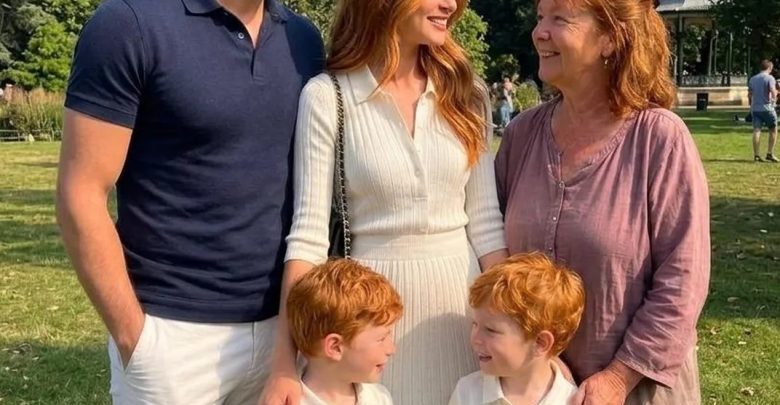
For twenty three years, my identity was inseparable from the cardboard packaging plant where I spent my days. My hands were perpetually stained with glue, my back carried the permanent ache of industrial labor, and my life was defined by the relentless, grinding necessity of survival. I was a single mother to my daughter, Hannah, left to navigate a world that was often unkind to those without resources. I wore the same threadbare winter coat for a decade and drove a rattling, rusted Buick that seemed to protest every mile of pavement. Yet, none of that mattered. I held onto the belief that my sacrifices were the foundation for Hannah’s future. When she graduated from college, I felt I had reached the pinnacle of my purpose. Then, she met Preston, a man whose life was the antithesis of mine. He came from a world of private schools, generational wealth, and high-stakes technology, and after they married, they moved behind the imposing iron gates of an elite neighborhood.
At first, I told myself that the distance between us was merely the result of different lifestyles. Preston adored Hannah, and they eventually welcomed twin boys, Caleb and Max. I loved my grandsons with a ferocity that felt like a physical weight in my chest. But there was a persistent, stinging anomaly: I had never once been invited inside their home. For five years, I stood on the outside of their life. Every time I reached out, a wall of excuses was erected. The boys were sick, there were contractors in the house, or Preston had clients visiting. I spent my days watching my grandsons at public parks or my own cramped apartment, always acutely aware of the boundary they had drawn. I began to construct a painful narrative in my own mind, convinced that Hannah had become ashamed of me. I feared she looked at my modest life and felt the need to hide her working-class mother behind the tall, black gates of her mansion.
The turning point was as unexpected as it was jarring. One afternoon, my phone pinged with a voice recording sent by accident from one of the twins’ tablets. I listened, my heart pounding, as I heard Preston’s mother questioning why I was never invited over. Then, I heard Preston’s voice, low and burdened. He said that if I ever stepped inside, I would discover what Hannah had been hiding for five years. He made a cryptic comment about the house technically belonging to Hannah and suggested that the source of their wealth was something I was not meant to know. My hands shook as I realized the entire premise of my insecurity—the idea that she was ashamed of me—was a lie. There was something else happening, something that had nothing to do with my social status and everything to do with a long-buried truth.
I did not wait for a formal invitation. At dawn, I drove to their gated community, ignored the security protocols, and marched to their front door. When Hannah opened it, the color drained from her face, but I did not stop. I pushed past her, stepping into the home I had spent years imagining. What I found was not a palace of cold, aristocratic luxury, but a disaster zone. There was exposed drywall, stacks of discarded construction debris, and half-finished projects in every room. It looked less like a mansion and more like a home that had been overwhelmed by a renovation that had spiraled completely out of control.
Preston stood in the kitchen, looking exhausted, and as I demanded the truth, the facade finally broke. Hannah began to weep as she explained the secret she had guarded for half a decade. My father, the man I had always known as a simple factory repairman, had lived a double life. He had been a brilliant, silent investor who had quietly built a fortune in land and property, accumulating wealth I never knew existed. Before he passed, he had updated his will, leaving the entirety of his hidden estate to Hannah. She had been sitting on a massive inheritance, terrified that revealing it would force a chasm between us. She feared that if I knew my own father had been rich while I was struggling to pay the heating bill, I would despise her or, worse, feel that our entire history had been a deception.
“I wasn’t ashamed of you, Mom,” Hannah sobbed, her voice trembling. “I was terrified that you would think I had changed, or that you would be so angry at Grandpa that you would never speak to me again. I thought keeping the money a secret was the only way to keep us close. And then, once we started rebuilding this house, everything just became too much. We got stuck in a cycle of delays and lies, and it became harder to come clean every single day.”
I looked around the house, and then I walked into the twins’ bedroom. The walls were covered in photographs of me—me holding the boys, me feeding them, me laughing in the park. I had been their secret hero all along, a constant presence in their hearts even when I felt excluded from their home. The distance hadn’t been created by pride; it had been created by a paralyzing, misguided fear. Hannah hadn’t been hiding because she looked down on my life; she had been hiding because she was scared of the power that her inheritance held over our family dynamic.
We sat together on the floor of their unfinished living room, the twins playing with their trucks, and for the first time in years, the tension vanished. Preston made coffee, and we spoke until the sun began to set. I realized that my own insecurities had blinded me to the reality of my daughter’s love. I had interpreted her fear as rejection, and in doing so, I had nearly lost the chance to heal our relationship. As we sat down to dinner, sharing laughter and the simple comfort of being together, I finally understood that we had both been prisoners of our own perceptions. Wealth and status are merely masks, and in the end, they are entirely irrelevant when compared to the simple, profound act of being honest with one another. I didn’t care about the mansion, the inheritance, or the secret life my father had lived. I only cared that for the first time in five years, the wall was gone, and I was exactly where I belonged.