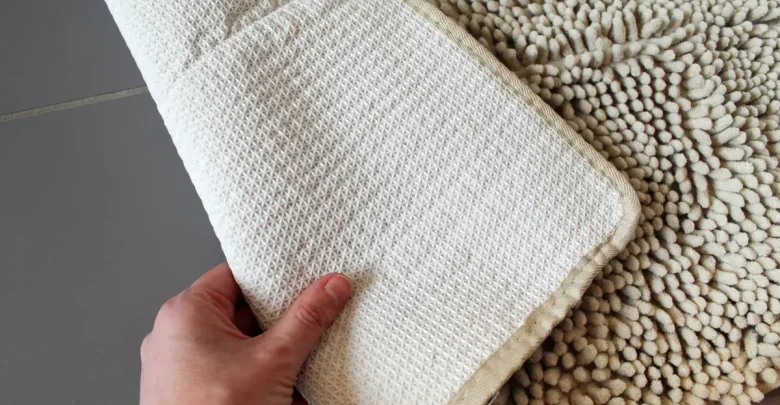
If you are the kind of person who will put almost anything in the washing machine, a bath mat can look like just another washable thing on the bathroom floor. Clothes, towels, sheets, even a dog bed: into the drum they go. A lot of the time, the machine finishes the cycle and nothing obvious goes wrong. That luck can hide a real limit. Some bath mats, once they are soaking wet, are simply too heavy for a typical home washer.
The mat’s job is to soak up water. A thick chenille, memory-foam, or rubber-backed mat can hold a surprising amount of it. Wet fabric plus a dense backing is a very different load from a heap of T-shirts, and that extra weight is the main reason this advice exists.

The Problem Is Weight, Not a Secret Setting
A home washer is built for a rated load, not for an object that behaves like a soaked sandbag once the water hits it. During the wash and especially during the spin, that extra mass can strain the drain pump, the tub, and the bearings that let the basket turn.
Family Handyman has warned that heavy, water-logged items can ruin a washer’s drain motor and spin-basket bearing. The same caution is often applied to duvets, comforters, sleeping bags, and bulky dog beds, not only to bath mats.
That is a repair most people would rather avoid. It does not mean every thin cotton mat, washed according to its label in a large-capacity machine, will destroy the appliance on the first try. It does mean a sopping, rubber-backed, or oversized mat is a poor candidate for a regular household washer, especially a compact one.

The backing is part of the trouble. A rubber or vinyl underside can trap water, make the mat awkward in the drum, and, on some products, crack or shed residue if it is agitated and spun like a towel.
Always read the care tag. Some mats are labeled machine-washable; others say to spot-clean or hose them off. The tag is a better guide than a general habit of “everything goes in the washer.”

Warning Signs Worth Taking Seriously
If you have already washed heavy items like this, it is fair to wonder whether the machine is still sound. The same Family Handyman advice often repeated with this tip is to check the space between the washer’s plastic tub and the metal spin basket. If there appears to be more than 1/8 inch of space between the two, the machine may need to be adjusted or serviced.
A heavy clunking sound when you turn the basket by hand, or during the spin cycle, is another warning that the appliance may need a serious repair.
Those are clues, not a complete diagnosis. If the washer walks across the floor, bangs during spin, or leaves a lot of water behind, stop using it and have a technician look at it. Do not keep testing a noisy machine with another bulky load.

Better Ways to Clean a Bath Mat
You do not have to choose between a grimy mat and a strained washer. Shake or hang the mat after showers so it is not sitting in a puddle all day.
Many mats can be rinsed in the tub or taken outside and sprayed with a hose, then pressed or hung until they are fully dry. A thin, tag-approved cotton mat may be fine in the machine if the load is not crowded and the backing is not a heavy rubber slab. Wash it with a couple of towels only if the manufacturer says that is acceptable; extra items can help balance a load, but they also add weight.

Memory-foam mats and very thick shag styles are the ones to treat with the most care. If the label allows machine washing and the mat is too bulky for your own drum, a laundromat with larger, industrial-strength machines is the option many home-repair guides suggest.
Those machines are built for heavier wet loads than a standard apartment or hallway washer.

After any wash or rinse, dry the mat completely before it goes back on the floor. A damp mat on bathroom tile is a slipping hazard and a good way to invite musty odors. Hang it, or use a dryer only if the care label clearly allows it. Rubber backings often prefer air-drying.
A quick way to judge the risk is simply to lift the mat when it is already damp. If it feels awkward in your arms before it has gone through a full wash cycle, imagine that same object after it has absorbed a drum full of water and then been spun.
Front-loaders and top-loaders can both struggle; a compact unit in an apartment is usually the least forgiving. If your machine already needs to be leveled, or it vibrates on a wooden floor, a heavy wet mat will make those problems more obvious.
It also helps to wash or rinse mats on a regular schedule so dirt and soap film do not become a project. A weekly or twice-weekly shake-out, plus a rinse when the mat starts to feel slimy or smell sour, keeps most bathrooms in good shape without a heroic laundry session. Replace a mat that has a crumbling backing, a persistent odor after a thorough dry, or a surface that stays slick even when you think it is clean.
If you are shopping for a new mat, it is worth looking at the care label before you fall in love with the texture.
A machine-washable cotton style will be easier to live with than a thick foam mat that can only be wiped down. Size matters too. A runner that covers most of the bathroom floor can become a very heavy object once it is wet, even if the material seems light when it is dry. Measure the space, choose a mat you can actually clean, and keep a hook or a tub edge ready so it can dry completely between uses.
Quick Questions
Can I ever put a bath mat in my washer?
Sometimes, if the care label says the mat is machine-washable, the mat is not a heavy rubber-backed or memory-foam style, and your machine has enough capacity that the wet load will not be oversized. When in doubt, rinse and hang it, or use a larger machine.
What else should stay out of a small home washer when wet?
The same weight problem applies to many duvets, stuffed comforters, sleeping bags, and bulky dog beds. Check the tag and the washer’s capacity, and use a laundromat for the heavy pieces.
My washer already sounds uneven. What now?
Stop adding bulky loads. A growing gap around the basket or a heavy clunk during spin is a reason to call a repair service, not a reason to run “one more cycle” and hope.
A little caution here saves money and frustration later. The mat will still get clean. The washer will last longer. And the bathroom will be safer if the mat is dry, intact, and actually able to stay put on the floor.
Thanks for giving your washing machine a little more mercy the next time the bath mat looks dirty. This is general home-care information, not a repair manual for a specific appliance, and the care label on your mat is still the first instruction to follow.