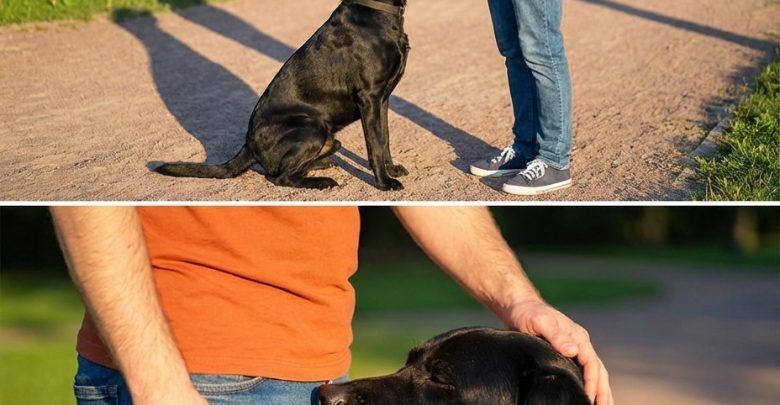
Being a truly responsible and loving dog owner goes far beyond providing food, water, shelter, and the occasional walk around the block. At its core, it’s about learning to step—at least partially—into a completely different way of experiencing the world. Dogs don’t interpret life primarily through language or sight the way humans do. Instead, they live in a richly layered world built on scent, movement, tone, and emotional cues we often overlook.
Understanding that difference is where real connection begins.
The world as a scent-first experience
To a dog, smell isn’t just one sense among many—it’s the dominant framework through which reality is understood. While humans might glance at a room and immediately recognize faces, objects, and context, a dog is reading an invisible landscape of chemical signals that tell a far more detailed story.
Every person carries a constantly changing “scent profile.” It reflects where they’ve been, what they’ve touched, what they’ve eaten, how long they’ve been out, and even subtle shifts in stress or excitement. What feels like a simple greeting sniff to us is, for a dog, closer to scanning an entire biography in seconds.
This is why a dog might linger longer with one person than another, or why they can recognize someone who hasn’t been home in months almost instantly. It’s not guesswork—it’s detailed sensory analysis happening in real time.
The science behind what we can’t perceive
Humans often underestimate just how advanced canine olfaction is. A dog’s nose contains hundreds of millions of scent receptors, and their brain devotes a significantly larger portion of processing power to smell than ours does. On top of that, dogs possess a specialized structure known as the vomeronasal organ, which helps them detect and interpret chemical signals that humans are completely unaware of.
This system allows them to pick up on pheromones and hormonal shifts in others. That means a dog isn’t just smelling “you”—they may be detecting changes in emotional state, stress levels, or excitement. It’s not mystical or emotional reading in a human sense, but a highly refined biological process that gives them a different kind of awareness.
Understanding this doesn’t make the behavior strange—it makes it logical.
Why sniffing is communication, not misbehavior
From a human perspective, a dog sniffing someone’s body or personal space can feel awkward or socially inappropriate. But that interpretation comes from applying human social rules to an animal that doesn’t operate under the same framework.
For dogs, sniffing is polite, normal, and essential. It’s their equivalent of greeting, checking identity, and confirming safety all at once. Preventing it entirely would be like asking a human to greet someone without speaking, seeing, or touching—removing their primary way of gathering information.
When owners understand this, the emotional reaction often shifts. What once felt embarrassing becomes understandable. And that shift matters, because frustration or tension from the owner can influence how the dog behaves in return.
The role of training and boundaries
Of course, understanding doesn’t mean allowing unregulated behavior in every situation. A well-adjusted dog still needs guidance, structure, and clarity about what is appropriate in shared spaces.
Training isn’t about suppressing instinct—it’s about channeling it. Teaching calm greetings, reinforcing basic commands, and rewarding controlled behavior helps a dog learn how to interact safely in a human-centered environment without losing their natural curiosity.
For example, a dog can be taught to sit before greeting guests, or to wait until given permission to approach. This doesn’t remove their ability to gather scent-based information—it simply gives that behavior structure.
Over time, consistency builds confidence. The dog learns that calm behavior leads to positive outcomes, and the owner gains predictability and control without conflict.
Emotional intelligence on both sides
One of the most overlooked aspects of dog ownership is the emotional feedback loop between human and animal. Dogs are extremely sensitive to tone, posture, and emotional energy. If an owner feels embarrassed or tense about their dog’s behavior, the dog often senses that shift and may become more anxious or uncertain.
On the other hand, when an owner remains calm and grounded, the dog is more likely to mirror that stability. This is why education about canine behavior doesn’t just help the dog—it helps the entire household dynamic.
A calm owner creates a calm dog. A confused or frustrated owner often unintentionally creates a confused or reactive one.
Living in a shared language
The goal of learning all this isn’t to anthropomorphize dogs or pretend they think like humans. It’s the opposite: it’s about respecting that they don’t, and learning their language on its own terms.
When you see sniffing not as “odd behavior” but as structured communication, everyday interactions change. Walks become less about control and more about exploration. Greetings become less about stopping behavior and more about guiding it. Even small moments—like a dog pausing to investigate a stranger—become easier to interpret without judgment.
A deeper kind of companionship
At its best, dog ownership becomes a form of translation between two species. Humans provide structure, safety, and guidance. Dogs provide intuition, sensitivity, and an entirely different way of perceiving the world.
When both sides are understood properly, the relationship stops being about correction and starts being about cooperation. The dog isn’t “misbehaving” for sniffing the world—they’re doing exactly what evolution designed them to do. And the human isn’t just controlling behavior—they’re helping shape it into something that works in a shared environment.
In that balance, something important emerges: trust. Not just obedience, but mutual predictability and understanding.
And that’s where the real bond begins.